
The Pagan Wheel of the Year: A Beginner's Guide to the Sacred Cycle
- Unfowled Owl
- Dec 1, 2025
- 4 min read
If you're new to pagan practices, you've probably heard about the Wheel of the Year. It sounds mystical and maybe a little intimidating, but here's the truth: it's simply a way of honoring the natural rhythms of the earth, the changing seasons, and the cycles of life, death, and rebirth.
Think of it as nature's calendar, marked by eight sacred festivals called Sabbats. Each one celebrates a different phase in the earth's journey around the sun, and each offers its own magic, lessons, and opportunities for reflection.
Let's break it down together, Sabbat by Sabbat.
What Is the Wheel of the Year?

The Wheel of the Year is an annual cycle of seasonal festivals observed by many modern pagans. It consists of eight Sabbats, evenly spaced throughout the year, that honor the earth's natural cycles. Four of these are Solar Sabbats based on astronomical events. The other four are Fire Festivals, which fall between the solstices and equinoxes and are rooted in Celtic agricultural traditions.
Together, they create a balanced wheel that turns endlessly, reminding us that life is cyclical, not linear.
The Eight Sabbats

Samhain - October 31
Theme: Death, ancestors, the veil between worlds. Samhain is considered the pagan New Year and is the time when the veil between the living and the dead is thinnest. This is a powerful time for honoring ancestors, reflecting on what has passed, and releasing what no longer serves you.
Ways to Celebrate:
Set up an ancestor altar
Perform a releasing ritual Practice divination
Enjoy a silent supper
2. Yule – December 20–31

Theme: Rebirth of the sun, hope, renewal
Yule celebrates the longest night of the year and the return of the light. From this point forward, the days begin to grow longer. It's a time of hope, rest, and quiet reflection as we await the sun's rebirth.
Ways to Celebrate:
Light candles or a Yule log to welcome the sun
Decorate with evergreens, holly, and mistletoe
Release the past year
Set intentions for the New Year
3. Imbolc February 1–2

Theme: First stirrings of spring, purification, inspiration
Imbolc honors the goddess Brigid and marks the first signs of spring. The earth is still frozen, but beneath the surface, seeds are beginning to stir. It's a time for cleansing, creativity, and preparing for new growth.
Ways to Celebrate:
Cleanse your home with smoke, sound, or salt
Light candles to honor Brigid and inspiration
Plant seeds for the year ahead
Create a Brigid's cross
4. Ostara – March 19–22

Theme: Balance, fertility, new beginnings
Ostara celebrates the balance of light and dark as day and night are equal. Spring is fully awakening, and the earth is bursting with new life. It's a joyful time of planting, growth, and fresh starts.
Ways to Celebrate:
Plant flowers, herbs, or vegetables
Decorate eggs as symbols of fertility Perform a balance ritual to align your worlds
Spend time in nature to honor rebirth.
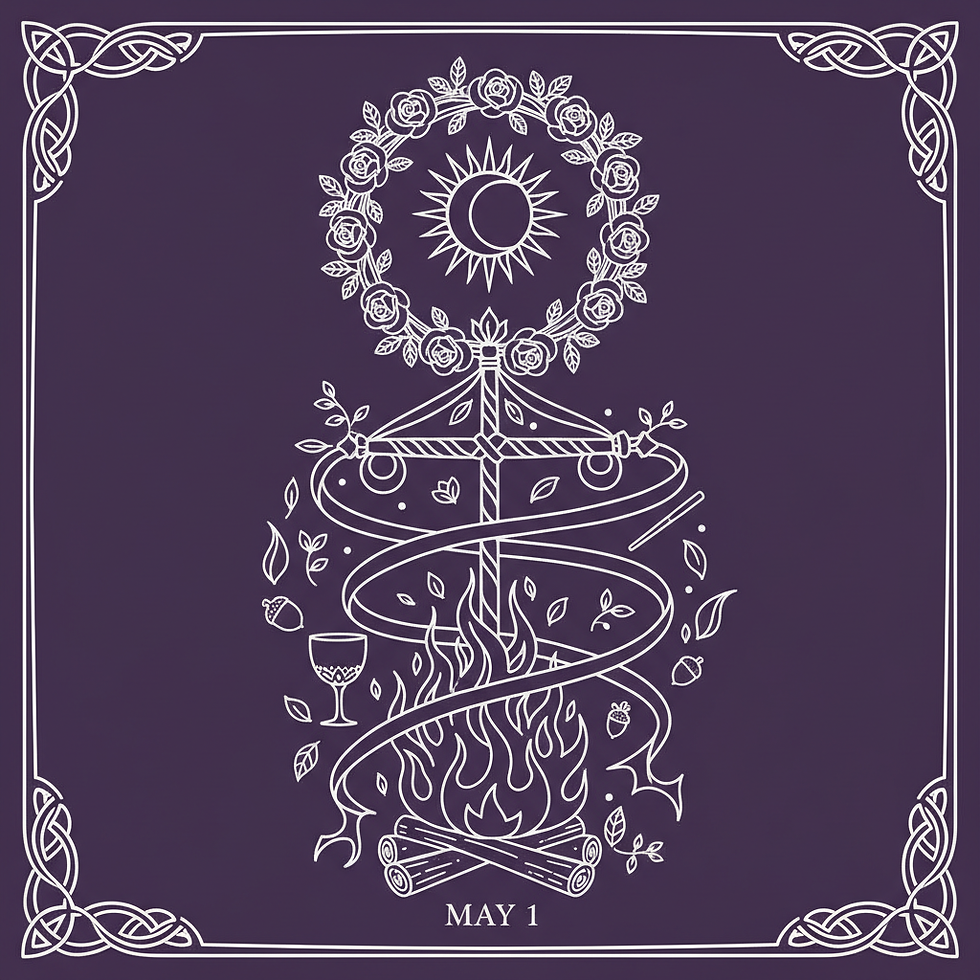
5. Beltane (May 1)

Theme: Passion, fertility, abundance
Beltane is a celebration of life in full bloom. It's a fire festival that honors passion, creativity, and the union of masculine and feminine energies. The earth is lush and fertile, and so are we.
Ways to Celebrate:
Dance around a Maypole or bonfire
Create flower crowns Decorate your space with blooms
Perform love or abundance magic
Celebrate your body, creativity, and desires
6. Litha - Summer Solstice – June 20–22

Theme: Peak power, abundance, gratitude
Litha marks the longest day of the year, when the sun is at its peak. It's a time of celebration, abundance, and gratitude for all that has grown. But it's also a turning point, as the days will begin to shorten once again.
Ways to Celebrate:
Watch the sunrise or sunset
Gather herbs and flowers at their peak potency
Create sun water
Charge crystals in the sunlight
Give thanks for the abundance in your life
7. Lammas/Lughnasadh - August 1–2
Theme: First harvest, gratitude, sacrifice
Lammas is the first of three harvest festivals. It celebrates the grain harvest and honors the god Lugh. It's a time to give thanks for what we've grown and to acknowledge the sacrifices made along the way.
Ways to Celebrate:
Bake bread from scratch as an offering
Reflect on what you've harvested this year (literal or metaphorical)
Share food with loved ones or your community
Perform a gratitude ritual
8. Mabon – September 21–24
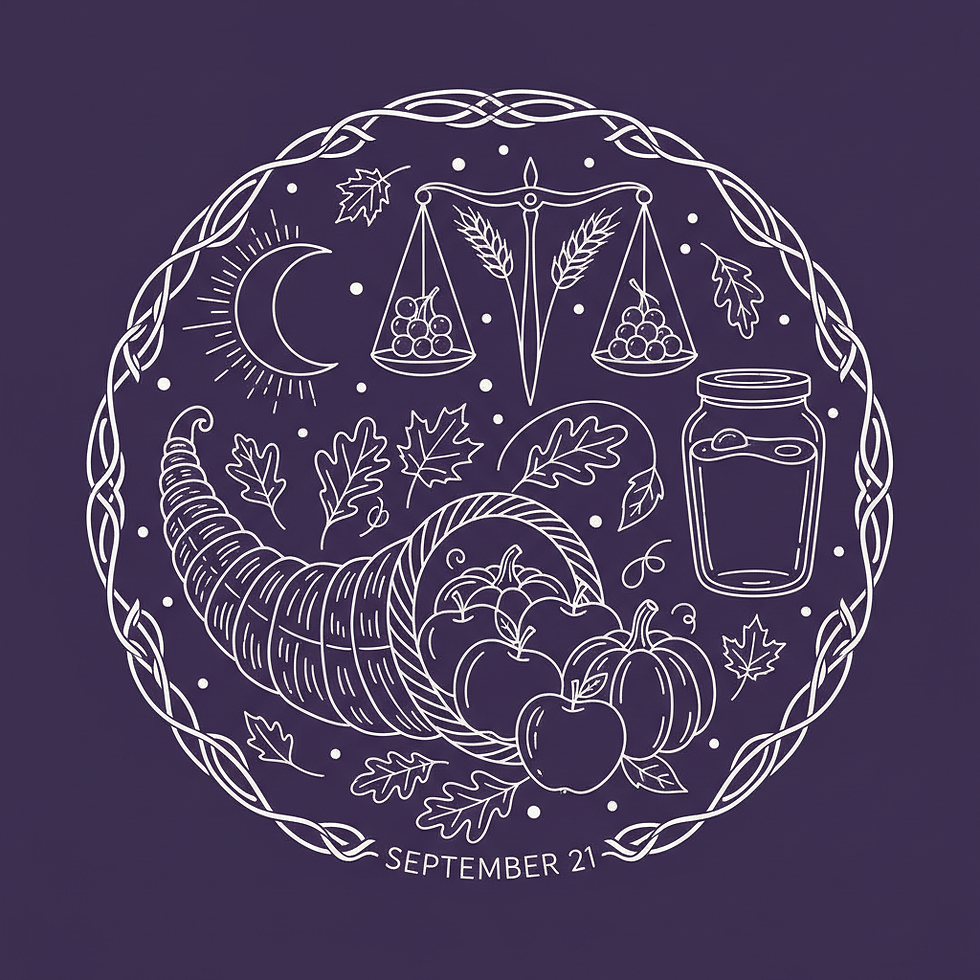
Theme: Balance, gratitude, preparation
Mabon is the second harvest festival and another moment of balance between light and dark. The earth is preparing for rest, and so are we. It's a time to give thanks, preserve what we've gathered, and prepare for the darker months ahead.
Ways to Celebrate:
Create a gratitude list or altar
Preserve foods (canning, drying, freezing)
Perform a balance or protection ritual
Spend time in nature and notice the leaves
How to Work with the Wheel
You don't have to celebrate every Sabbat perfectly (or at all). The Wheel of the Year is a guide, not a rulebook. Here's how to make it your own:
Start small. Pick one or two Sabbats that resonate with you and explore them deeply.
Follow your intuition. If a ritual doesn't feel right, change it. Your practice is yours.
Connect with nature. The Wheel is about honoring the earth's rhythms. Go outside, observe the seasons, and let nature be your teacher.
Reflect and journal. Each Sabbat offers lessons and themes. Take time to reflect on how they show up in your life.
Final Thoughts
The Wheel of the Year is a beautiful reminder that life is cyclical. There are times for planting and times for harvesting. Times for celebration and times for rest. Times for letting go and times for welcoming in the new.
You don't have to be perfect. You don't have to know everything. You just have to show up, honor the earth, and trust the process.
Welcome to the Wheel, friend. It's always turning, and there's always a place for you.
What Sabbat are you most drawn to? Drop a comment and let's chat about it.
Comments